
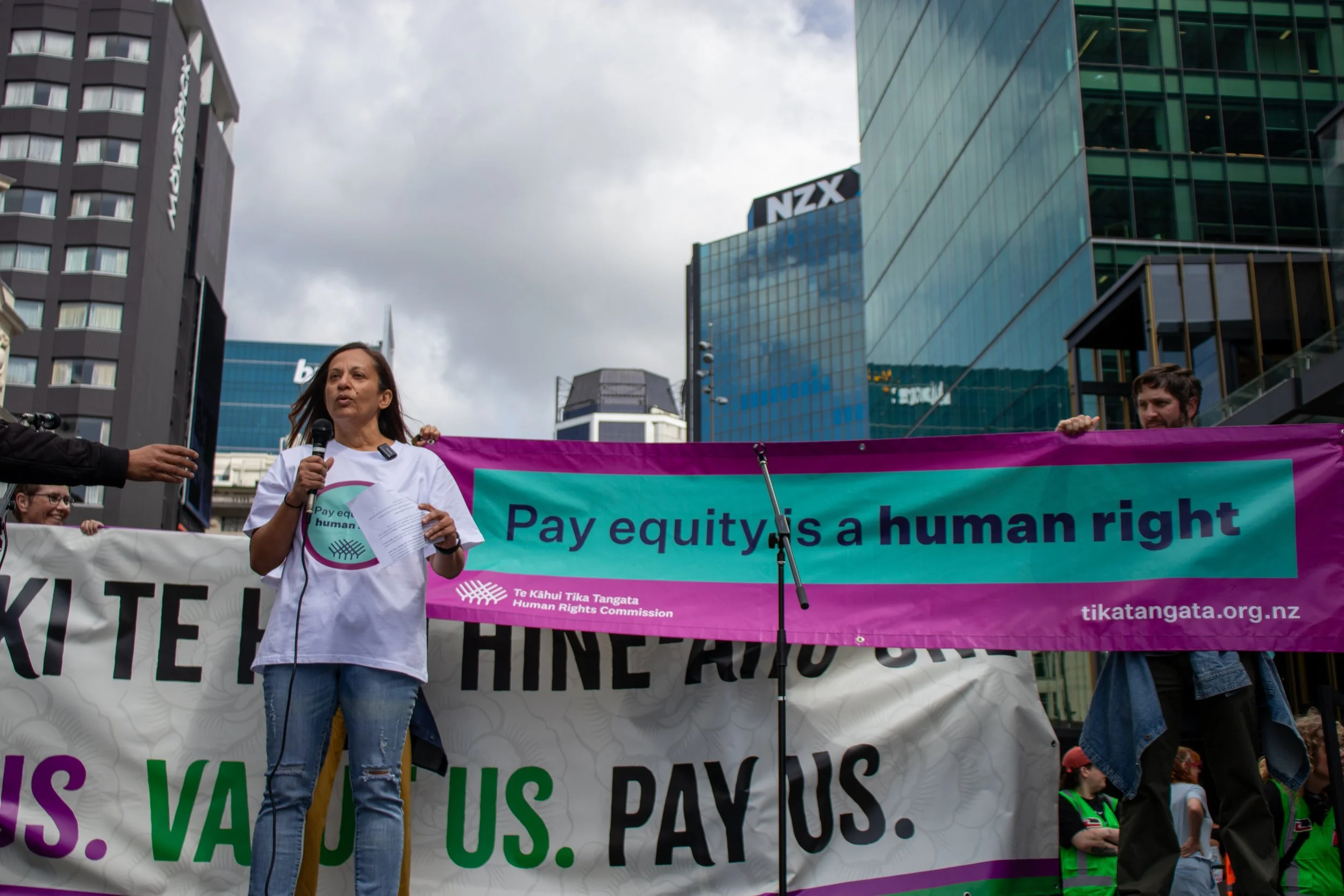
Pay Equity is a human right
The Pay Equity Coalition Aotearoa is a coalition of organisations, human rights advocates, community groups and unions working to advance and protect pay equity in Aotearoa New Zealand and uphold the rights of women workers to be free of gender-based discrimination.
WE ARE STRONGER TOGETHER
The fight for women's rights includes the right to fair pay. Yet work performed predominantly by women continues to be undervalued.
Following changes to pay equity laws in 2025, more than 180,000 workers lost a pathway to challenge gender-based undervaluation.
The Pay Equity Coalition Aotearoa exists to change this by protecting pay equity rights and ensuring women can achieve fair pay for work of equal value.
Our Advocacy
-
![]()
Kristine's List
ELECTION 2026
Add blurb -
![]()
CEDAW
United Nations Complaint
Read about PECA's complaint concerning New Zealand's pay equity law changes.
-
![]()
Our Advocacy
Articles and Reports
Read PECA's work on pay equity, and access information women's economic rights and the campaign for change.
-
![]()
Voices of pay equity lost
Voices of Pay Equity Lost, gathers first-hand stories from care and support workers affected by the Government's May 2025 decision to cancel 33 pay equity claims. It documents the human impact behind the numbers and calls on political parties to commit to genuine pay equity ahead of the 2026 election.
EQUAL PAY. PAY EQUITY. THE FIGHT CONTINUES
1950s
Women workers campaign for equal pay
In the 1950s, women workers and unions organised around a clear demand: Women should be paid fairly for the work they do.
Women clerical workers challenged the undervaluation of their work building a wider movement for equal pay.
1957
A movement takes shape
The PSA brought women’s organisations and unions together to build a national campaign for equal pay.
The Council for Equal Pay and Opportunity keeps women’s pay on the agenda and building pressure for change.
1960
An early breakthrough
Equal pay is won for government workers
After years of organising and repeated attempts to win fair pay, the Government Service Equal Pay Act was passed.
1972
Equal Pay becomes law
Years of pressure led to a Government Commission of Inquiry into equal pay and legislation.
The Equal Pay Act 1972 was passed and women and men doing the same work were now entitled to the same rate of pay.
1974
The Law isn’t enough
Just two years after the Equal Pay Act, Wellington meat packers were still being paid “women’s wages”.
The predominantly young women workers went on strike for 14 months and won a male rate for their work.
PAY EQUITY. LANDMARK CASE CHANGES WHAT IS POSSIBLE
2012-2015
A landmark case changes what is possible
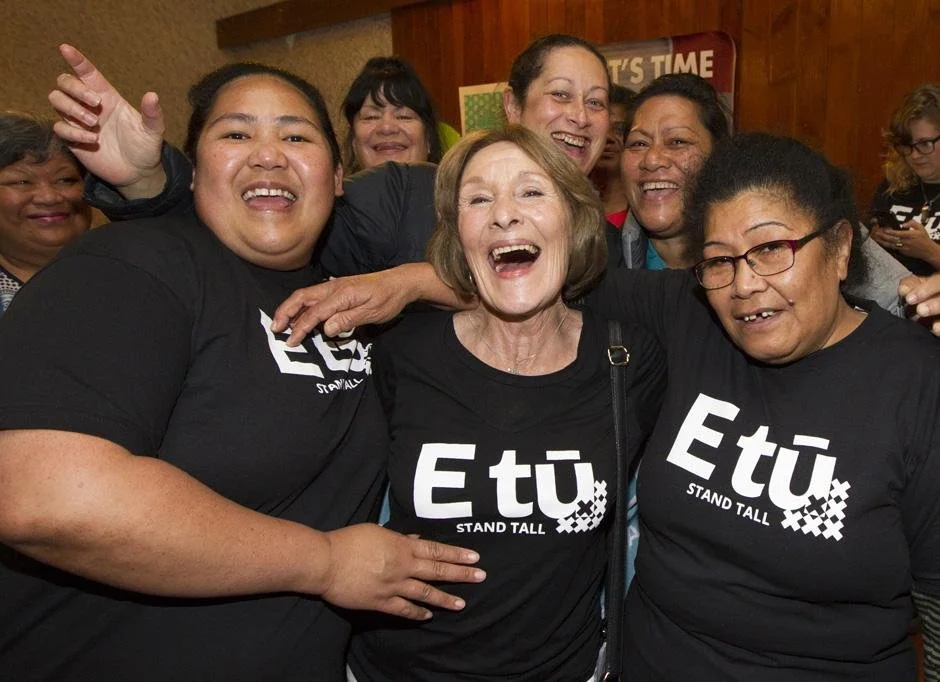
Kristine Bartlett and E tū challenged the undervaluation of care work in the Terranova case. The courts confirmed that equal pay law could address work of equal value for whole workforces, opening a new pathway to pay equity — one that went beyond individual workplaces to whole female-dominated occupations.
Women turn wins into a system
From one landmark case to a pathway for thousands.
Unions bring forward new claims and fought to turn the court victory into a workable system. In 2020, Parliament unanimously passed amendments strengthening the process for raising pay equity claims.
2017-2023
2016-2020
Pay Equity starts to deliver
More than 150,000 workers had their pay equity claims resolved, with average undervaluation of 32%.
Kaiārahi i te Reo win the first pay equity settlement for a Māori workforce with undervaluation of 79%, demonstrating how gender and ethnicity can compound undervaluation.
PAY EQUITY BACKSLIDING
The system come under pressure and progress is put at risk
After years of progress, the Government reconsiders the pay equity system and the way settlements were funded.
The frameworks that had helped claims progress were dismantled.
2023-2024
May 2025
New Law is rushed through
The Equal Pay Amendment Act 2025 becomes law with changes introduced and passed under urgency.
The changes remove important protections from the pay equity process and impose significant barriers
2025 -2026
A movement mobilises and the rollback is challenged
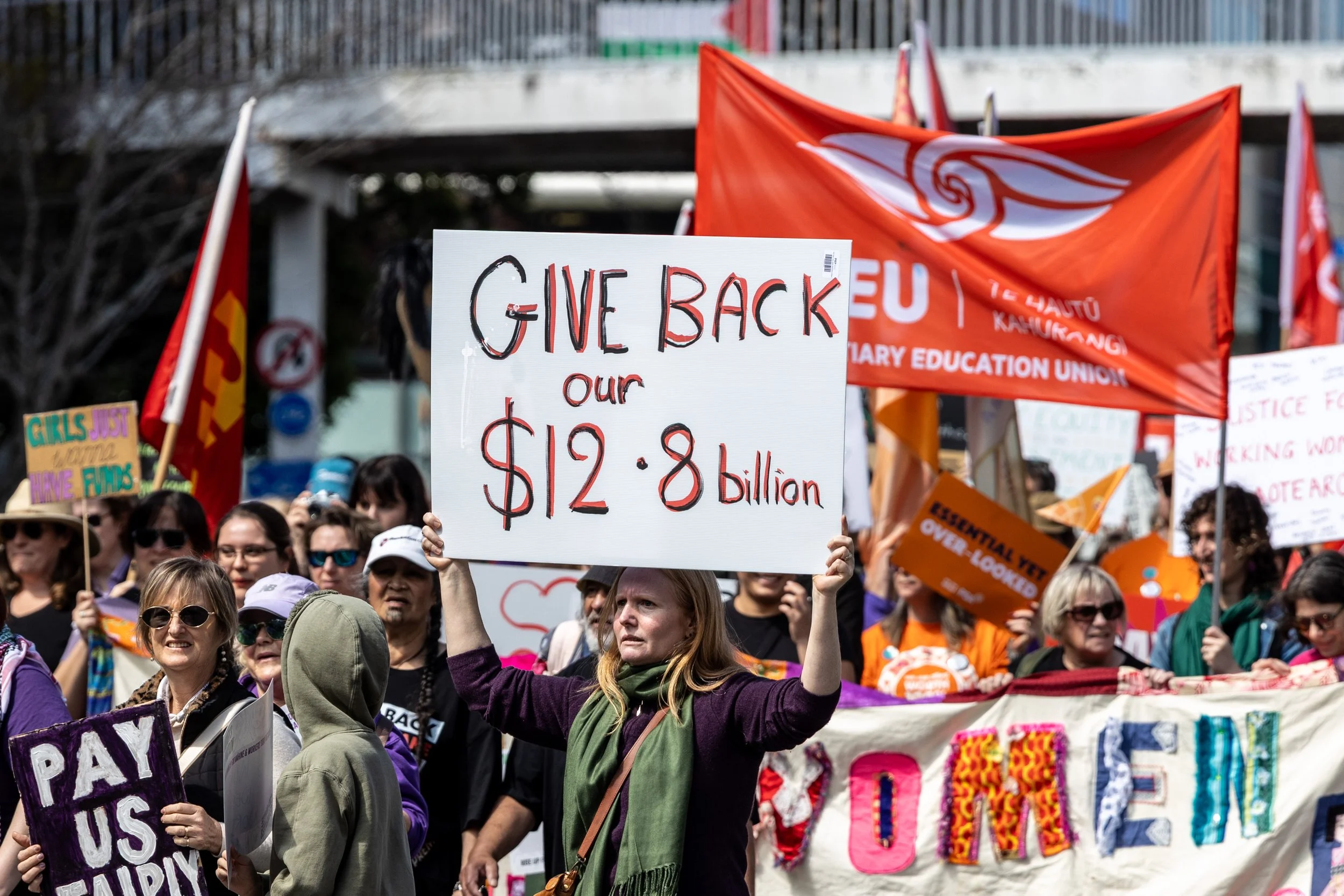
Women, workers and pay equity advocates organise to challenge the rollback. The struggle shifts from winning new protections to defending the right to pursue pay equity at all.
Pay equity advocates and unions take the Government’s changes to court, both domestic and international
NOW
Vote Pay Equity
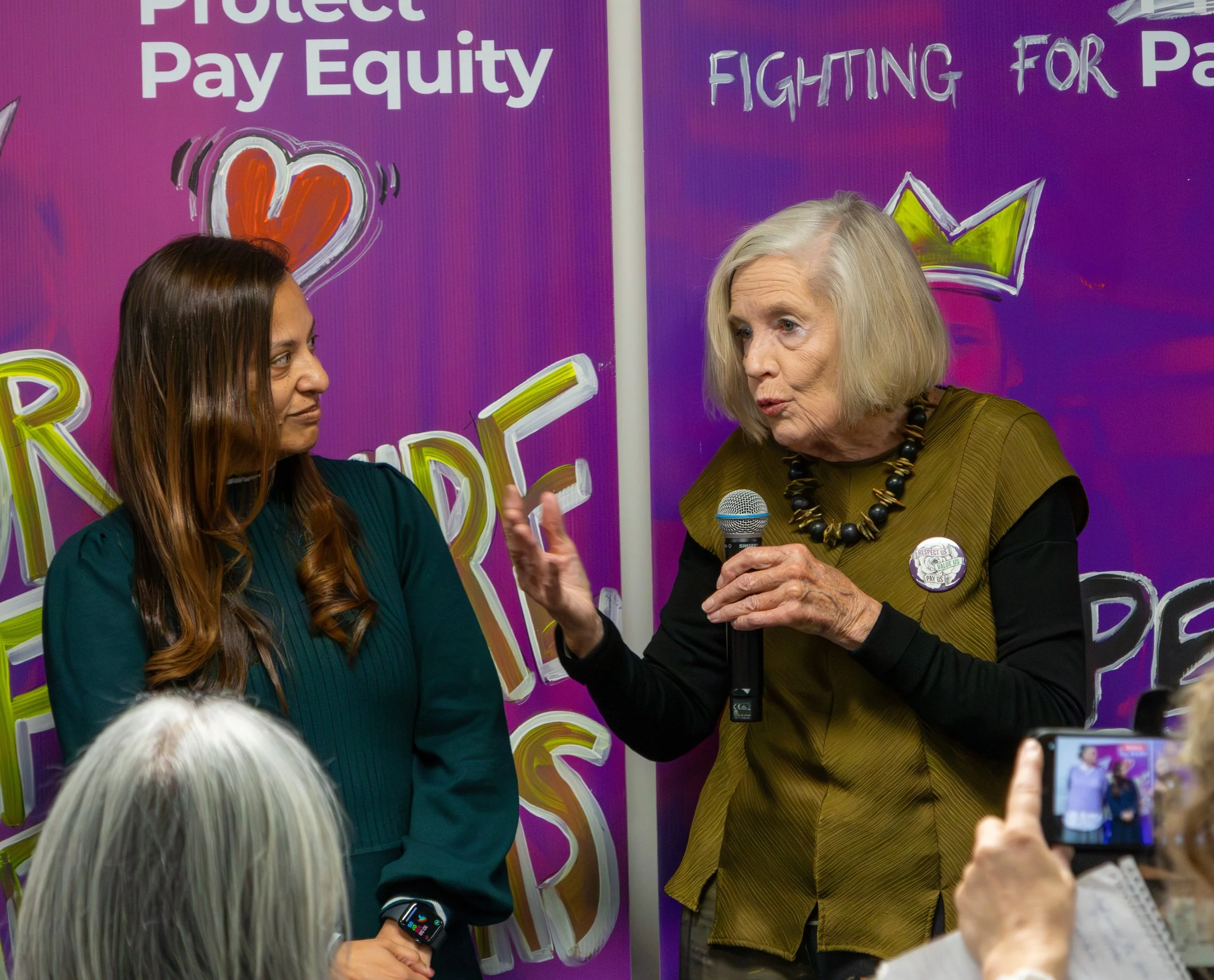
The story isn't over. With a General Election in 2026, voters have a direct chance to decide whether pay equity is restored and PECA is putting that choice in front of them through Kristine's List.